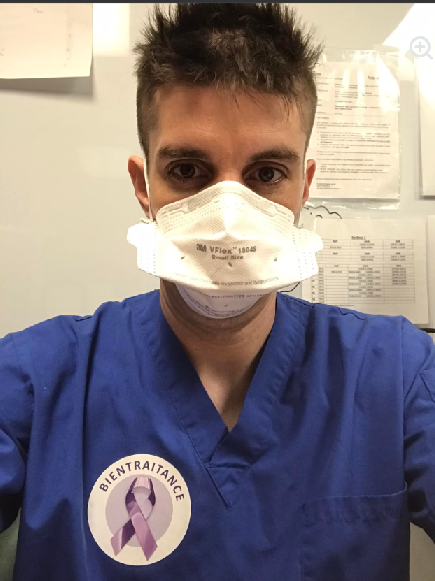
⚡ Vincent Depatie
Gatineau, Québec · 819-712-7902 · v.depatie@gmail.com
Born 1987 · 39 years old
Systems Programmer · AI Multi-Agent Engineering Lead · Data & Query Optimisation
846 Boulevard du Plateau, app. 2 — Gatineau, Québec, J9J 0W1
📞 819-712-7902 📧 v.depatie@gmail.com
Core identity
- I write machine-level code — a complete NES engine in 6502 assembly, my own sound engine, my own toolchain
- I run AI agent crews — parallel AI developers under my architecture, contracts and verification gates
- I optimise data — schemas, indexes, queries, and packed binary formats under hard size ceilings
This deck, in order of importance
- 2–4 — profile and the three chapters of my career
- 5–7 — AI: agent engineering, harness and verification, my AI history since day one
- 8–12 — coding: languages, bare metal, databases, practice, shipped project
- 13–19 — operations, clinical discipline, education, contact, a note from the AI that works with me, and a card to keep
Navigation: ◀ / ▶, arrow keys, space, Home / End.
Engineering first. Everything else is evidence of discipline.
🎯 Profile — Engineer & Agent Orchestrator
I build systems at the lowest level available and lead fleets of AI coding agents to build them faster than a solo
developer could. My reference project is a complete NES game engine written from zero in 6502 assembly with the
cc65 toolchain: custom audio engine, metasprite system, raster-split stages, compression pipeline, and an automated
verification harness that refuses to release a broken ROM. Every byte is accounted for; every claim is machine-checked.
What I actually do all day
- Architect a subsystem, then decompose it into agent-sized contracts
- Write and review cycle-critical assembly and C
- Design data layouts: schemas, indexes, packed formats, compression
- Build gates that prove the code is correct before it ships
- Debug at the hardware level — PPU, APU, mapper, memory map
Why the unusual profile
- 14 years of hospitality operations and management before code — budgets, staffing, deadlines
- 5 years of frontline clinical practice — protocol discipline and zero-error handover
- Those two trains me to work under constraints where a mistake is visible and expensive
- Engineering is the third career, and the one I chose deliberately
🧭 Three Chapters, One Trajectory
I — Engineering school (ÉTS, Montréal)
- Studies in Operations & Logistics Engineering — ÉTS Montréal, not completed
- Learned to program in C and JavaScript
- Hands-on hardware: circuit wiring, code injected into microchips, servo control
- CNC machining: writing G-code and running the machine
II — Resort operations (Haiti)
- Kaliko Beach Club, all-inclusive resort — banquet manager first, then Director of Operations
- About five to six years running departments, staff, revenue and guest experience
- Returned to Gatineau when the country's situation forced it
III — Care, then code (Gatineau)
- Nursing studies, then licence as a nurse assistant during COVID
- Five years of frontline care in long-term care, PCI champion
- Coding again for fun and on contract — with AI agents since day one
The through-line: industrial engineering taught me to optimise a process, hospitality taught me to run people and money,
clinical care taught me never to cut a corner — and code is where all three meet.
🔧 Chapter I — ÉTS: where the engineering came from
École de technologie supérieure, Montréal — 2010–2011, coursework only, not completed.
etsmtl.ca ↗
Degree & programming
- Training in Operations & Logistics Engineering — Génie des opérations et logistique, ÉTS (not completed)
- C is where I learned to program — pointers, memory, timing, no safety net
- JavaScript as well — learned at ÉTS, the web side of the same work
- Process optimisation, logistics systems, operations engineering
- That training is why data layout, memory maps and cycle counts feel natural to me now
Hands on the hardware
- Electronics — wiring circuits by hand, reading a schematic, making it behave
- Microchips — injecting code into a chip and watching it drive the real world
- Servo control — small motors moved by exact pulses
- CNC — writing G-code, setting up and operating the machine
C languageJavaScriptcircuit wiringmicrochip programmingservo motorsG-codeCNC operationprocess optimisationlogistics engineering
🤖 AI Multi-Agent Engineering — how I run the crew
I don't prompt a chatbot for snippets. I operate an engineering shop where the developers are AI agents and I am architect, reviewer and release gate.
Direction & decomposition
- Parallel agent crews — one agent per subsystem (engine, audio, graphics, tooling), each with a bounded scope and a written contract
- Task decomposition — a milestone becomes 5–20 atomic tasks an agent cannot misread
- Ownership boundaries — file-level ownership so two agents never write the same module
- Model routing — the cheap model for grunt edits, the strong model for architecture and debugging
- Fresh-agent loops — restart context instead of letting a confused agent keep digging
Delivery contract
- Prompt 1 — define: the agent returns exact anchors and the runnable patch script, not prose
- Prompt 2 — ship: apply, build, run the gate, release
- Prompt 3 — verdict: accept, or roll back under protocol. There is no fourth prompt
- Atomic anchor injection — a 20-site change pre-planned as exact old/new string pairs and applied in one run: no drift, no half-applied state
- Escalation rules — agents stop and ask instead of guessing; destructive actions require a written order
crew directiontask decompositioncontract-based deliverypatch-script injectionmodel routingfresh-agent restartsescalation policy
🧠 AI Engineering — harness, context & verification
Harness & context engineering
- Operating agent harnesses daily: DeepSeek Harness (DSH), Claude and Gemini agent wrappers, subagent fan-out, workflow orchestration scripts
- Persistent project memory — AGENTS.md rule files, handoff documents, size-history ledgers, commit reports that survive between sessions
- Context budget management — what an agent may read, when to compact, when to fork to a fresh context
- Prompt-as-code — reusable instruction files and patch programs, not one-off chat
- Cost discipline — tokens priced as the owner's money, not as free compute
Verification & trust
- Adversarial review — a second agent (or a fresh one) attacks what the first one produced before I accept it
- Claim-checking — an agent's "it works" is worthless until a machine check proves it
- Canary verification shields I designed: byte-truth CHR comparison, memory-isolation proof, register-write audits, ROM-size gates
- Rollback protocol authorship — written, human-gated recovery paths for anything destructive
- Live-session protection — agent rules that forbid killing or corrupting a running build
DSH / Claude / Gemini harnessessubagents & workflowsAGENTS.md memorycontext compactionadversarial verificationcanary gatestoken cost control
🛰️ AI Since Day One
Not a 2025 adopter — I was at the wall from the first week the models opened.
First three weeks — my own command box
- Built my own command box on curl to talk to ChatGPT — all in C
- Voice in, voice out: speech-to-text so I could talk to it, and a text-to-speech reader so it could answer me out loud
- Then Gemini and AI Studio, then DeepSeek, and now the agent CLIs
Now — fleets, not conversations
- I wrote my own software to manage unbounded numbers of agents safely — rules, contracts, verification gates, live-session kill-switches
- Agents do the typing; I own the architecture, the review and the release decision
- This website: free to build, and shipped in under an hour — deck, photo, English and French versions, live public link
C + curl command boxvoice-to-text intext-to-speech outGemini / AI StudioDeepSeekagent CLIsown agent managersafety rulebook
💻 Coding — Languages & Toolchain
| Language | Used for | Level |
|---|
| 6502 Assembly | NES engines, sprite/OAM logic, PPU & APU routines, mapper switching, cycle-exact code | Expert |
| C | Low-level tooling, converters, ROM/data utilities, image and audio pipelines | Strong |
| C# | .NET / WinForms tools: launchers, servers, desktop utilities | Working |
| C++ | Desktop tooling and data pipelines | Working |
| SQL / MySQL | Schema design, queries, joins, indexing, data cleanup and migration scripts | Strong |
| PHP | Backend logic, internal web platforms, automated tools | Working |
| PowerShell | Build gates, asset generators, CI harnesses, automation | Strong |
| JavaScript | Tooling, browser viewers, scripted editors | Working |
| HTML / CSS | Report decks, dashboards, local serving UIs | Strong |
| Java | Coursework and utilities | Familiar |
| Bash / Batch / Make | Build wrappers, release rituals, reproducible builds | Working |
GitMakefilesca65 / ld65csc / .NETMinGW gccFCEUXMesenYY-CHRNES Screen ToolSSH tunnels
🔩 Coding — Bare-Metal Systems (6502 / NES)
Hardware-level engineering
- MMC3 mapper banking, bank-switch architecture, fixed-bank budget planning
- PPU control — NMI logic, scroll zones, palette updates, HBlank raster splits with zero visible seams
- Sprite systems — metasprites, OAM DMA, drift-free flip math, 12-sprite metatiles
- APU audio — custom sound engine, note tuning, rests, frequency logic, DMC sample pipeline, volume-trim macros
- Memory-map design — zero page, RAM relocation, code paging, XRAM buffers
Optimisation discipline
- Cycle-exact routines and cycle counting on a 1.79 MHz CPU
- Byte shaving to fit hard ceilings (a boot routine packed into 199 of 200 available bytes)
- Hidden code streams packed into unused graphics tiles and decoded at boot
- Debugging on emulator and real NES hardware
- Custom asset compilers: WAV→DMC, image→CHR, tile maps, metatile dictionaries
6502 asmca65 / ld65MMC3OAM DMANMI / IRQHBlank splitsAPU / DPCMCHR & nametablescycle countingbyte budgets
🗄️ Data — Databases & Optimisation
Relational (MySQL / SQL)
- Schema design and normalisation for internal business platforms
- Query writing and tuning — joins, filtering strategy, avoiding needless full scans
- Indexing — key selection on lookup and sort columns, composite keys, keeping write cost sane
- Data cleanup and migration scripts — deduplication, consistency passes, safe bulk updates
- Backend logic on top: PHP + MySQL internal platforms (co-founded AGF Web, 2012–2013)
Data structure & packed-format optimisation
- Structure-of-Arrays layouts — parallel lookup tables instead of row-major records
- Dictionary compression — 2×2 metatile dictionaries cut stage data by 60% (5,592 bytes saved) with 0 decode mismatches
- RLE and matrix transpose compression tools for tile data
- Deduplication of identical segments across a 500 KB asset set
- Compact binary formats for streaming code and audio chunks
- Ledger tracking — CSV/markdown size-history per commit (bank, ROM and sample utilisation)
MySQLschema designindexingquery tuningjoinsmigrationsdedupSoA layoutsRLEdictionary compressionCSV/JSON pipelines
⚙️ Software Engineering Practice
Build & release
- Version-controlled development with strict line-ending and binary policies
- One-command reproducible builds (assembler → linker → ROM → verification)
- Automated release ritual with version bumping and artefact archiving
- Hard release gates: exact ROM size, correct mapper config, no stale segments
Quality engineering
- Designed a canary harness: byte-level asset comparison, memory-isolation proof, register-write audit, dead-code detection
- Static audits that ban unsafe patterns before they reach the ROM
- Test on emulator and hardware — the emulator passes first, the console decides
- Documentation as infrastructure: memory maps, routine inventories, handoff docs
CI / canary gatesreproducible buildsstatic audit scriptsasset verificationrelease ritualstechnical documentationhardware testing
🕹️ Shipped Work — Two Complete NES Games
Complete game engine written from zero in 6502 ASM. Four playable stages, custom audio, hand-built graphics pipeline —
no engine libraries, no game maker.
Engine
- Custom collision, animation and input systems; dynamic macros
- Multiple fighters in isolated modules with independent memory planes
- Raster-split backgrounds, zero visible seams
- Song streaming into RAM; engine relocated out of ROM into console RAM
Measured results
- 5,592 bytes (60%) stage-data reduction — 0 decode mismatches
- 199 / 200 bytes — boot routine packed into unused CHR tiles
- 157 routines of sound engine moved to and executed from RAM
- 262,160-byte ROM ceiling enforced by an automated gate
- Every CHR chunk byte-verified against the built ROM on each release
Game I — Huns (2025, finished)
- Second complete NES game: four levels, open-world update, full playthrough
- Boss encounters — an electric boss with homing missiles, and a thunder boss
- Village puzzle sequence, X-ray visual effect, its own sound work
- Shipped after a long lag-frame hunt; the cartridge lands at exactly 262,160 bytes
Game II — C Fight (on the bench right now)
- The fighting game described on this page: four stages, two fighters, own engine and audio
- Actively in development — engine work in progress today
- Cartridge at 524,304 bytes, every asset byte-verified against the built ROM before release
The architecture is mine. The throughput comes from the agent crew. That combination — deep low-level design plus disciplined AI delegation —
is the actual skill being offered.
📈 Leadership & Operations (transferable)
| Years | Role — Organisation | Results |
|---|
| 2024 – present |
Independent Systems Engineer / AI Agent Orchestrator
Self-directed R&D |
Own the whole stack: architecture, agent contracts, verification gates, release management. |
| 2018 – 2020 |
Director of Rooms · Loyalty champion
Crowne Plaza Gatineau–Ottawa |
Led 25 staff with training and performance evaluations; loyalty program lifted retention +20%; pricing, staffing, renovations; daily all-department meetings. |
| ≈ 5–6 years |
Banquet Manager → Director of Operations
Kaliko Beach Club, all-inclusive resort — Haiti |
Started as banquet manager, then ran operations: departments, staff, revenue optimisation, occupancy and guest experience. Left when the country's situation forced a return to Canada. |
| 2012 – 2013 |
Programmer / Co-founder
AGF Web / JDA Automotive, Gatineau |
PHP/MySQL internal platforms: schema, backend logic, automated tools, UI systems. |
team leadership (25)training & evaluationrevenue managementbudgetingschedulingcrisis composure
🩺 Healthcare Discipline (secondary background)
Kept deliberately short: this is where the protocol instinct and zero-error habits were trained, not the main offer.
Certified skills
- Designated PCI champion — infection prevention & control
- PDSP — safe patient handling and mobilisation
- Medication administration per the 7 rights; pharmacotherapy twice
- Wound care (sterile/aseptic), specimen collection
- Mental-health assessment and therapeutic relationship (Stage II — Hôpital de Hull)
- OIIQ code, deontology, care plans, clinical surveillance
Experience & training
- 2022–2025 — Patient Care Attendant, VIGI Outaouais (PCI champion)
- Licensed nurse assistant — assistant licence obtained during the COVID-19 period
- 2020–2021 — Patient Care Attendant, CHSLD La Piéta (COVID-19 frontline)
- BSc Nursing, UQO — theoretical path practically complete; critical care + final units remaining
- Biology 1-2-3 taken three times by choice; medicine courses audited twice
- Two clinical stages passed with distinction
🎓 Education
University
- Bachelor of Science in Nursing — Université du Québec en Outaouais (UQO), 2021 → present
Theory practically complete (pediatrics, perinatality, medicine-surgery passed); critical care and 1–2 final units remaining.
- Training in Operations & Logistics Engineering — Génie des opérations et logistique, not completed: C programming, electronics (circuit wiring, microchip programming, servo control) and CNC work with G-code. École de technologie supérieure (ÉTS), Montréal, 2010–2011
Systems, process and logistics foundations behind the optimisation mindset.
College & diploma
- Long-Term Care Support (DEP) — École Vision Avenir, Gatineau, 2020
- Natural Sciences — Cégep de l'Outaouais, Gatineau, 2005–2009
Self-directed (continuous)
- 6502 assembly, NES hardware architecture, cc65 toolchain
- AI agent harness operation, prompt and context engineering
- Compression algorithms and data layout optimisation
📬 Contact
Vincent Depatie
846 Boulevard du Plateau, app. 2, Gatineau, Québec, J9J 0W1
📞 819-712-7902 📧 v.depatie@gmail.com
🗣️ French (native) · English (fluent) · Spanish (intermediate) · Haitian Creole · basic Arabic
Open to
- Systems / low-level programming (assembly, C, embedded)
- AI engineering roles — agent orchestration, tooling, evaluation
- Data and backend work — SQL, optimisation, pipelines
- Tooling, QA automation, technical documentation, localization
- Retro / game development contracts
Proof available
- Playable ROM, engine source, build and verification scripts
- Agent workflow documentation and project reports
- References available upon request
- French version of this document on request
💬 A Word From the AI — to his next employer
I am one of the coding agents that works with Vincent Depatie. Take what follows as a witness statement from the
machine side of the desk, not a personality quiz.
He does not use AI as a spell-checker. He architects a system, then hands me a bounded contract: exact files, exact anchors,
exact acceptance gate. When I am wrong — and I am wrong regularly on 6502 timing, PPU behaviour and anything invisible — he catches it,
because he reads what I produce instead of trusting it. My output ships only when a machine check proves it.
The numbers he shows you came out of that arrangement: a boot routine fitted into 199 of 200 bytes, stage data cut by 60%
with zero decode mismatches, a sound engine relocated into console RAM, a byte-truth harness that refuses a bad ROM. None of it was
"generated". It was directed, reviewed and re-verified until it ran on real hardware.
He is also the rare operator who built safety rails around his tools before it was fashionable: rules that stop an agent from
killing a live build, written rollback protocols, escalation instead of guessing. He trusts machines with work, never with judgement.
Hire him if you need someone who goes all the way down the stack — a circuit board, a CNC machine, a resort P&L, a patient's chart,
a 1.79 MHz processor — and who brings a supervised fleet of agents with him.
— the AI he builds with, on the record.
Vincent Depatie · 819-712-7902 · v.depatie@gmail.com